
Know your type
Blood types save specific lives.
Every blood type matters. Some are matched to trauma patients, some to cancer patients, some to newborns. Your type determines how your donation helps our local hospitals most.
Not sure of your type? We'll tell you free after your first donation.
The ABO + Rh system
Eight common types. One giant impact.
Blood types are determined by two primary factors: the ABO antigens on your red blood cells and the Rh factor (positive or negative). You inherit your blood type from your parents, and it remains the same for life under normal circumstances.
Under normal circumstances, Rh-positive blood is given to Rh-positive patients. However, in critical trauma emergencies when Rh-negative inventory is depleted, Rh-positive blood can be given to men and to women past childbearing age. Rh-negative blood can be given to both Rh-negative and Rh-positive patients. O-negative blood lacks A, B, and RhD antigens, making it the universal red cell donor type.
- Can receive
- O+, O-
- Can donate to
- All Rh-positive types
- Preferred donation
- Whole Blood, Double Red Cells, Platelets
Most common type — always in demand.
- Can receive
- O− only
- Can donate to
- Every patient (universal red cell donor)
- Preferred donation
- Whole Blood, Double Red Cells, Platelets
Used in trauma when there's no time to type-match.
- Can receive
- A+, A−, O+, O−
- Can donate to
- A+, AB+
- Preferred donation
- Platelets, Plasma
- Can receive
- A−, O−
- Can donate to
- All A and AB patients
- Preferred donation
- Platelets, Plasma, Whole Blood
- Can receive
- B+, B−, O+, O−
- Can donate to
- B+, AB+
- Preferred donation
- Platelets
- Can receive
- B−, O−
- Can donate to
- All B and AB patients
- Preferred donation
- Whole Blood, Platelets
B− whole blood is in steady demand — we ship two units a week to Stanford.
- Can receive
- Every type (universal red cell recipient)
- Can donate to
- AB+
- Preferred donation
- Plasma, Platelets
Universal recipient of red blood cells, and a universal plasma donor.
- Can receive
- A−, B−, AB−, O−
- Can donate to
- AB+ and AB−
- Preferred donation
- Plasma, Platelets
Rarest type in the U.S. — universal plasma donor.
Population percentages are U.S. averages. Percentages vary by region and ancestry.
Ways to give
How You Can Donate
Pick the donation that fits your schedule and body. Every type saves lives.
One donation, many lives
The components of every donation.
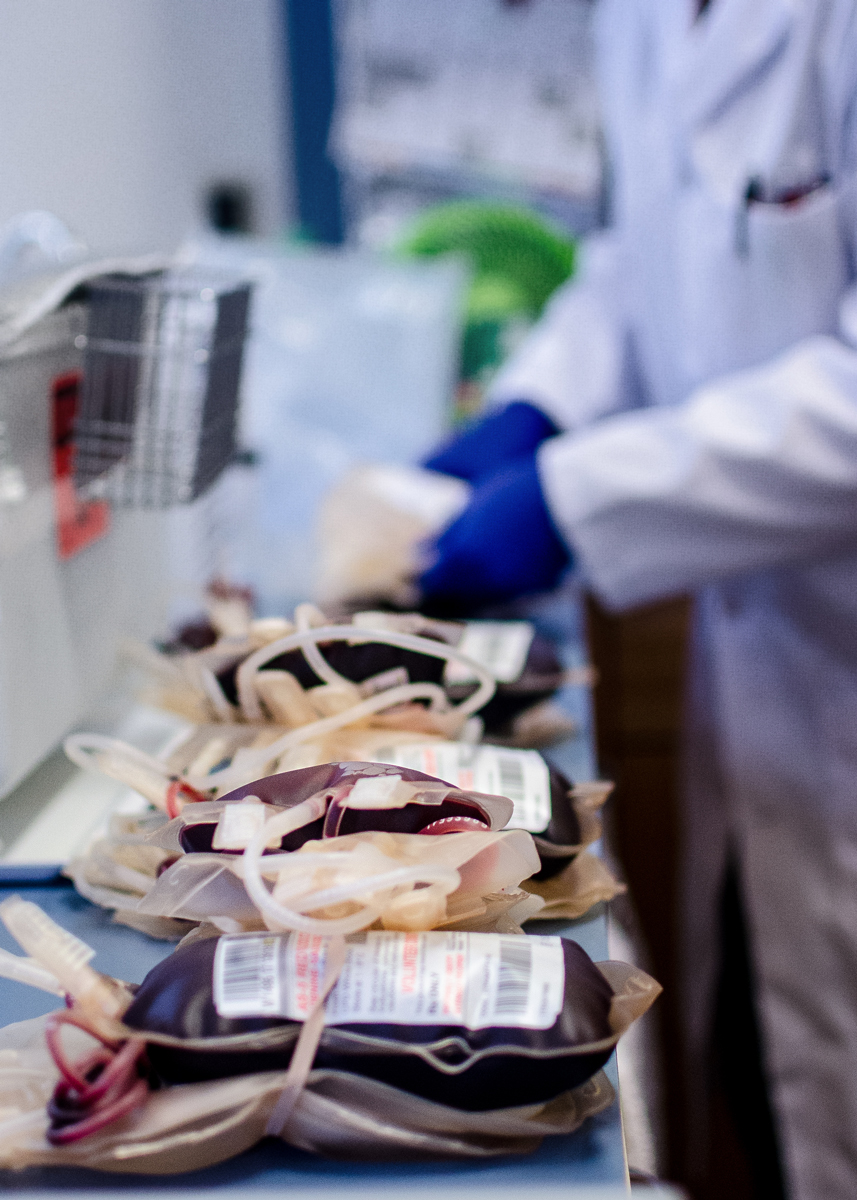
Once you donate, your blood is carefully separated in our lab into components — each one going to a patient with a different need at a North Coast hospital.
Red Blood Cells
Carry oxygen throughout the body. Used for surgery, trauma, anemia, and chronic conditions like sickle cell.
Platelets
Help blood clot. Critical for chemo patients, transplant recipients, and bleeding disorders. Shelf life: only 5–7 days.
Plasma
The liquid that carries proteins, nutrients, and clotting factors. Used for burn victims, trauma, and clotting disorders.
Cryoprecipitate
Made from plasma. Concentrated clotting factors used in surgery, obstetric bleeds, and massive transfusion.
Safety first — every time
Every donation is tested. Every donor is screened.
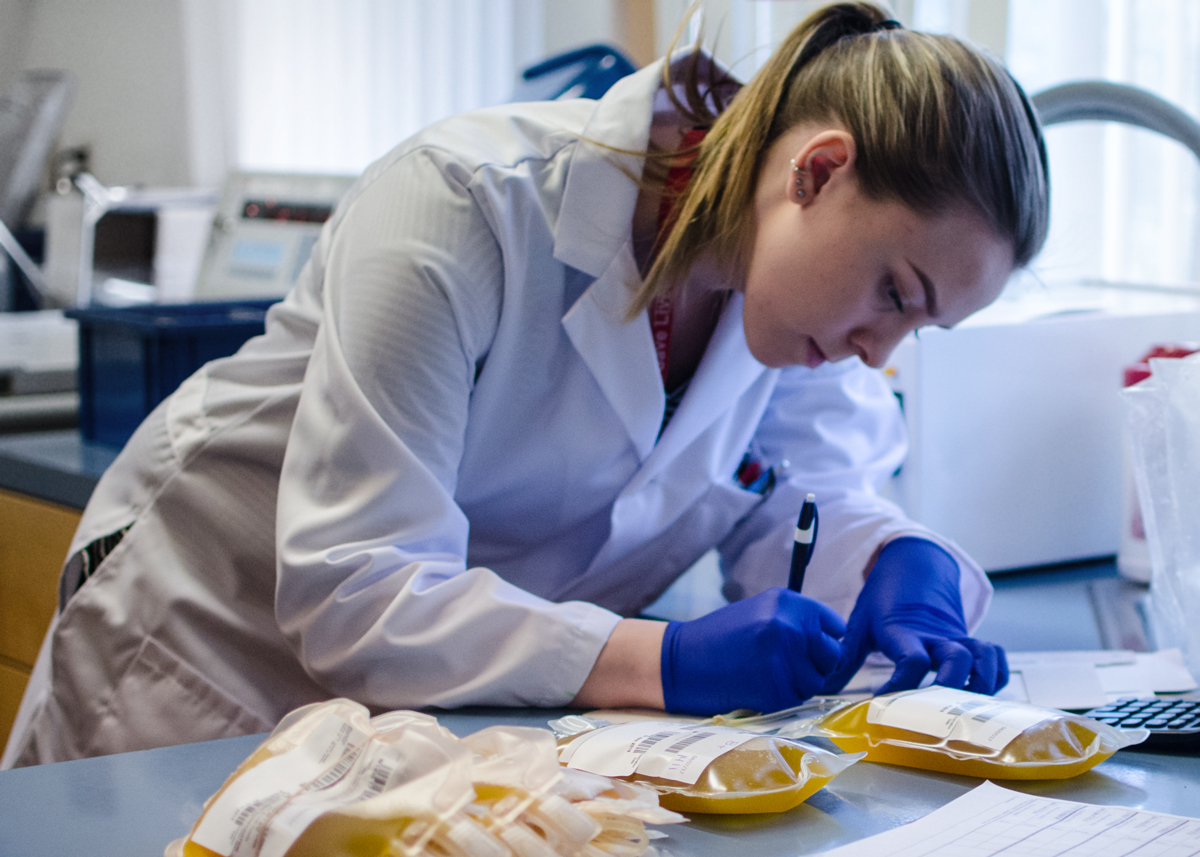
Donor and patient safety is our highest priority. Every unit of blood we collect is tested in accordance with FDA regulations before it's released to a hospital.
Before you donate
Donor Screening / Pre-Donation
- • Confidential health history questionnaire
- • Mini-physical: temperature, pulse, blood pressure
- • Hemoglobin check for iron deficiency risk
- • A private, one-on-one review with a trained donor care specialist
After you donate
Post-Donation / Infectious Disease Testing
- • Blood type confirmation (ABO and Rh)
- • Infectious diseases including HIV and Hepatitis B & C
- • Syphilis
- • West Nile Virus
- • Other transfusion-transmissible infections per federal guidance
- • Confidential notification and follow-up if a result is abnormal
Blood that does not meet strict safety standards is never released for transfusion. If a screening result is outside normal limits, we notify the donor confidentially with appropriate follow-up information.
Ready when you are
Book your appointment today.
Call our donor line or make an appointment online. Walk-ins are welcome at our Eureka donor center and every mobile blood drive, but appointments are encouraged and guarantee your preferred time.
- Monday8 AM – 6 PM
- Tuesday8 AM – 6 PM
- Wednesday8 AM – 7 PM
- Thursday8 AM – 6 PM
- Friday8 AM – 4 PM
- Sat & SunClosed
Eureka, CA 95501